
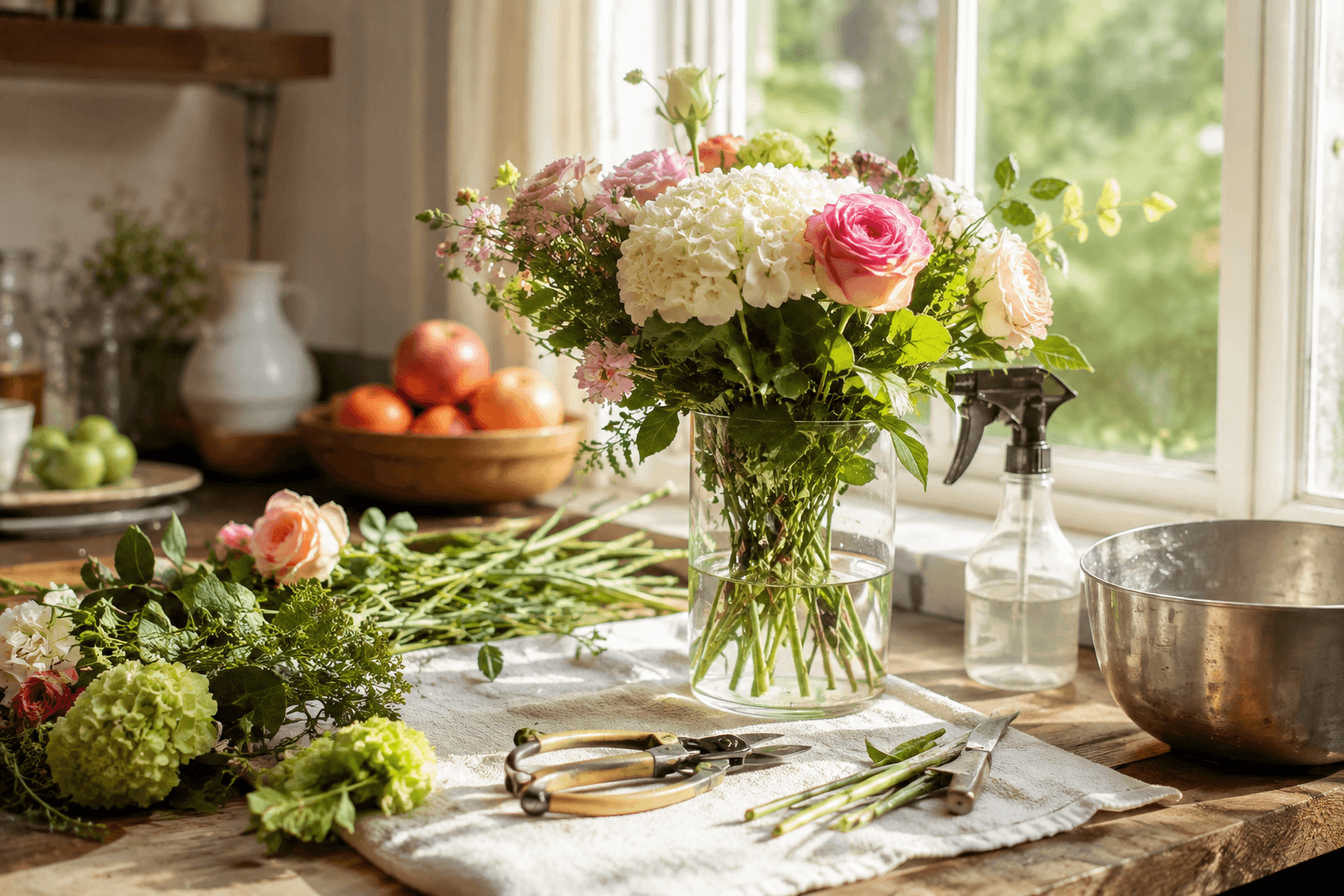
The fastest way to make cut flowers last in Atlanta’s humidity and summer heat is to re-cut stems at an angle under running water. Use a clean vase with fresh flower food. Keep arrangements away from direct sunlight and air vents. Change the water every two days.
Atlanta’s combination of high humidity and intense summer temperatures speeds up bacterial growth and dehydration. Flowers need extra attention during the warmer months to reach their full vase life.
Anyone who has picked up a bouquet from Northpark Florist in July knows the disappointment of watching petals droop within a day or two. It is not a sign of low quality flowers. It is simply how Southern summers interact with delicate plant tissue. With a few adjustments to care routine, the same bouquet can stay fresh for a week or longer, even during the hottest stretch of the year.
Atlanta’s climate creates a unique challenge for flower care. Humidity levels often sit above 60 percent from May through September, while temperatures regularly climb past 90 degrees. This combination accelerates the two biggest threats to cut flowers: bacterial growth in vase water and moisture loss through the petals and leaves.
Warm water breeds bacteria far faster than cool water. Bacteria clog the tiny vascular channels inside flower stems, blocking the flow of water and nutrients to the bloom. At the same time, high humidity slows evaporation from the air. It does nothing to stop flowers from losing water through their own tissue when exposed to heat. This means stems are working harder just to stay hydrated.
Ethylene gas is another factor many people overlook. This natural plant hormone speeds up aging, and rising temperatures release it in larger amounts. Fruit bowls, cigarette smoke, and even overripe vegetables in the kitchen can release ethylene. These sources can shorten the life of a nearby arrangement.
Keeping flowers away from these sources matters more in summer than any other season. Vase cleanliness plays a bigger role than most people realize. A vase that looks clean can still hold a thin film of bacteria from previous flowers.Warm water causes that residue to multiply quickly. Washing the vase with hot, soapy water and rinsing thoroughly before each new arrangement removes this hidden buildup. This gives fresh stems a clean start.
Cool water, not cold, is the standard recommendation from floral experts, and it becomes especially important during Atlanta summers. Water between 100 and 110 degrees Fahrenheit actually helps hydrate certain woody stems faster.
However, for most soft-stemmed flowers like roses, tulips, and hydrangeas, room temperature or slightly cool water works best to avoid shocking the plant.
Flower food is not optional during hot months.
The packet that comes with a bouquet contains sugar to feed the bloom, acid to balance the water’s pH, and an antibacterial agent to slow microbial growth.
Mixing it correctly and refreshing it every time the water is changed extends vase life significantly compared to plain tap water.
If a packet is unavailable, a homemade mix of one quart water, one teaspoon sugar, and a few drops of household bleach can serve as a temporary substitute.
Water hardness can also play a role, though it is less discussed.
Atlanta’s municipal water is generally moderate in mineral content, which is favorable for most cut flowers.
However, homes on well water or with heavily softened water systems may notice faster wilting. Filtered or bottled water is a simple fix if tap water seems to be shortening a bouquet’s life.
Start by trimming an inch off each stem at a 45-degree angle using sharp shears. Ideally, hold the stem under running water as you cut. This angled cut increases the surface area for water absorption. It also prevents an air bubble from forming, which can block hydration. Repeat this trim every two to three days for the life of the arrangement.
Strip any leaves that would sit below the waterline. Submerged foliage decomposes quickly in warm water, feeding bacteria and clouding the vase within a day. This single step is one of the most overlooked yet effective ways to keep flowers fresher longer. This is especially true in a humid climate, where bacterial growth is already accelerated.
Place the vase somewhere cool, away from direct sunlight and heating vents. Also avoid drafty air conditioning units that blow directly onto the petals. A spot near a window that gets filtered light is fine. But a windowsill with full afternoon sun will wilt most flowers within hours during a Georgia summer. Overnight, move the arrangement to the coolest room in the house. For very delicate blooms, even the refrigerator can add extra days of freshness.
Misting the petals lightly with room temperature water once a day can also help. This is particularly true for flowers like hydrangeas, which absorb moisture through their bloom as well as their stem. This should be done in moderation, since oversaturating petals in a humid room can encourage mold rather than prevent wilting. A light, even mist in the morning is usually enough to offer extra hydration without added risk.
Some flowers naturally hold up better in heat and humidity than others. Tropical varieties like orchids, birds of paradise, and anthuriums are built for warm, humid conditions. They often outlast more delicate options like peonies or ranunculus.
Sturdy classics such as carnations, alstroemeria, and chrysanthemums are also excellent choices. They’re ideal for anyone hosting an outdoor summer gathering in Atlanta.
For special occasions where longevity matters, discussing climate-appropriate blooms with a professional florist can make a real difference. A well-designed custom flower arrangement can be built specifically around heat-tolerant varieties, ensuring the display looks beautiful from the first day through the last.
On the other end of the spectrum, flowers like gardenias, peonies, and hydrangeas are naturally more sensitive to heat and humidity and tend to have a shorter window before wilting begins. This does not mean they should be avoided, but it helps to set realistic expectations and to give them extra attention, such as more frequent misting and stricter placement away from warm rooms.
When flowers spend less time in transit and direct heat, they arrive fresher and last longer once they reach the vase. Requesting same-day flower delivery during cooler parts of the day, such as morning or early evening, helps minimize the amount of time blooms spend exposed to peak summer temperatures.
For events, weddings, or celebrations planned during Atlanta’s warmer months, it also helps to review seasonal flower trends in Atlanta before finalizing an order. Certain blooms that trend in spring simply are not built to withstand a July afternoon, and a knowledgeable florist can guide substitutions that keep the same aesthetic while improving durability.
Not every flower care question has a simple do-it-yourself answer. If an arrangement is wilting unusually fast despite following proper care steps, the issue may be related to how the flowers were harvested, stored, or transported before reaching the home. Reaching out to a flower shop near you in Atlanta for advice, or picking up locally grown stems that have spent less time traveling, can solve the problem at the source.
Those looking to build their own arrangements at home can also benefit from learning proper techniques. A guide on how to arrange flowers like a pro covers cutting, conditioning, and arranging methods that pair well with the humidity-specific tips in this article for a complete care routine.
Atlanta’s humidity and summer heat do not have to mean short-lived bouquets. Fresh cuts, cool water, proper flower food, and smart placement away from heat and ethylene sources are the foundation of a longer vase life. Choosing heat-tolerant blooms and timing deliveries thoughtfully add another layer of protection against the season’s toughest conditions.
Whether it is a gift for someone special or flowers for a home gathering, taking these small steps makes a noticeable difference in how long an arrangement stays vibrant. Explore the full flower shop selection to find blooms suited for Atlanta’s climate, and reach out with any questions about keeping a specific arrangement looking its best all week long.
During hot, humid weather, vase water should be changed every one to two days. Warmer temperatures speed up bacterial growth, so more frequent changes help prevent cloudy water and stem blockages that shorten vase life.
Yes, placing flowers in a refrigerator overnight can significantly slow the aging process. Just keep them away from fruits and vegetables that release ethylene gas. This can add extra days to their lifespan, especially during summer months.
Room temperature or slightly cool water works best for most flowers, including roses and hydrangeas. Very cold water can shock delicate stems, while lukewarm water helps hydrate certain thicker, woody stems more effectively.
Atlanta’s high humidity combined with intense summer heat accelerates both bacterial growth in vase water and moisture loss through petals, causing flowers to wilt faster than in cooler, drier climates.
Ice cubes are not recommended for most flowers, as sudden cold can shock the stems. It is better to keep the vase in a consistently cool room rather than relying on ice for temperature control.
A light daily misting can benefit certain moisture-loving flowers like hydrangeas, but it should be done in moderation. Too much surface moisture in a humid environment can encourage mold or fungal growth on the petals.
Yes, a clean vase makes a measurable difference. Bacteria residue left in a vase from a previous arrangement can multiply rapidly in warm water, so washing the vase thoroughly before each new bouquet helps extend freshness.

We are a full service flowershop. We offer everyday flowers for birthdays, funerals and special occasion. We also specialize in weddings and events. Place an order or book with us today!

Monday: 9:00 am to 5:00 pm
Tuesday: 9:00 am to 5:00 pm
Wednesday: 9:00 am to 5:00 pm
Thursday: 9:00 am to 5:00 pm
Friday: 9:00 am to 5:00 pm
Saturday: 9:00 am to 2:00 pm
We are a full service flowershop. We offer everyday flowers for birthdays, funerals and special occasion. We also specialize in weddings and events. Place an order or book with us today!
Monday: 9:00 am to 5:00 pm
Tuesday: 9:00 am to 5:00 pm
Wednesday: 9:00 am to 5:00 pm
Thursday: 9:00 am to 5:00 pm
Friday: 9:00 am to 5:00 pm
Saturday: 9:00 am to 2:00 pm