
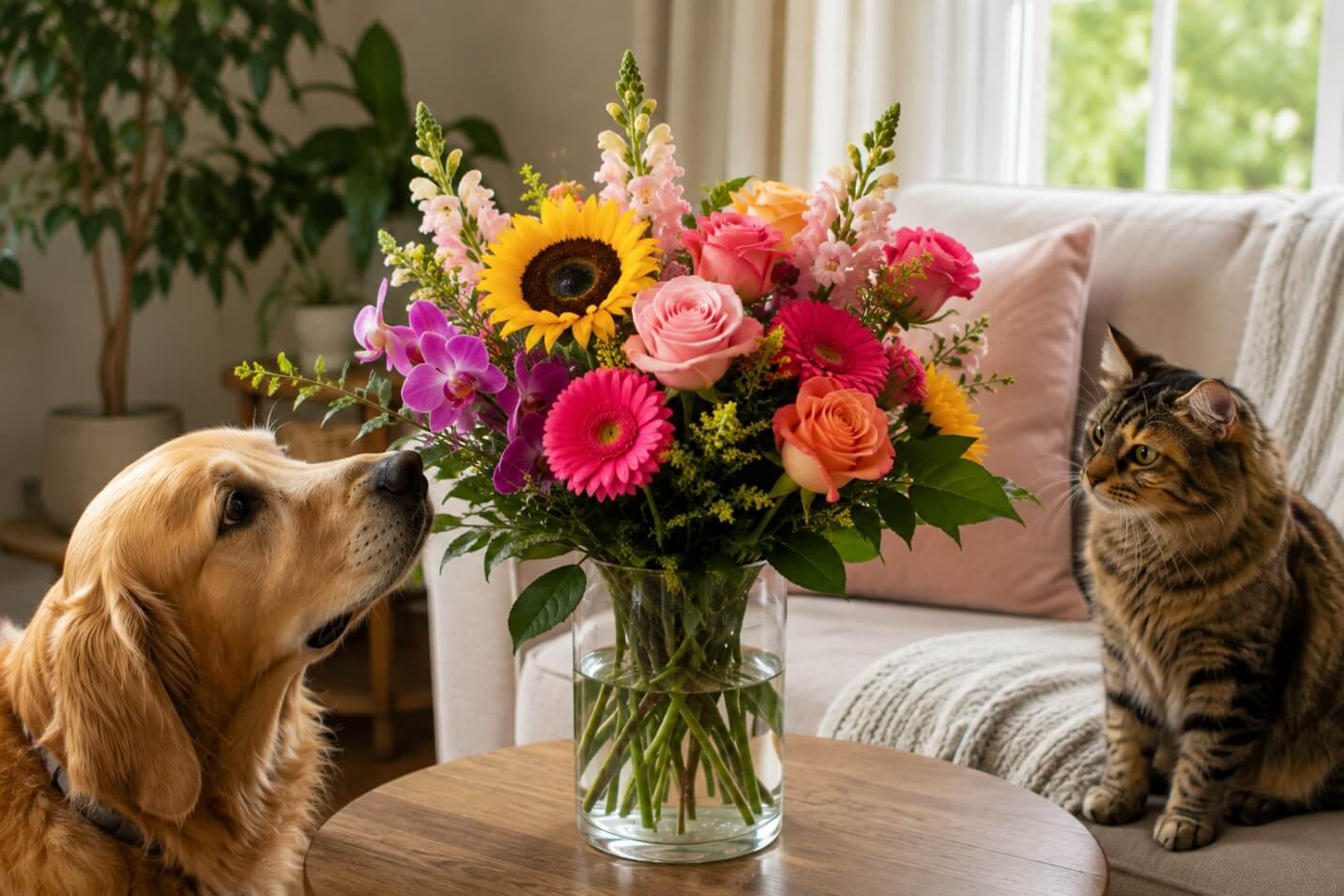
Pet-safe bouquets in Atlanta typically include roses, sunflowers, orchids, gerbera daisies, and snapdragons. These are non-toxic to dogs and cats according to ASPCA guidelines. Flowers to avoid entirely around pets include lilies, tulips, daffodils, and hydrangeas. These can cause anything from mild stomach upset to severe kidney failure if chewed or eaten.
Choosing flowers for a home with a curious dog or a cat that likes to nibble on greenery is not something to guess at. Northpark Florist regularly helps Atlanta pet owners select arrangements that look just as elegant as a traditional bouquet. This is done without putting a furry family member at risk. Knowing which blooms are safe, and which ones belong on a strict avoid list, makes it possible to enjoy fresh flowers at home. This means no constant worry.
Many of the most popular flowers sold in florist shops are actually dangerous for cats and dogs. Lilies are the most well-known example, and even a small amount of pollen brushed onto a cat’s fur can be fatal if licked off during grooming. This makes lilies one of the few flowers veterinarians consistently warn pet owners to avoid entirely, regardless of how the arrangement is displayed.
Atlanta households with indoor cats face a particular challenge, since cats often chew on leaves and petals out of curiosity rather than hunger. Dogs, on the other hand, are more likely to knock over a vase and chew on stems while playing. Both behaviors create exposure risks that many gift-givers do not think about until after a bouquet has already been delivered.
Choosing a pet-safe bouquet is not about sacrificing beauty for safety. Modern floral design offers dozens of non-toxic options that rival traditional favorites in color, texture, and fragrance. A well-designed arrangement built around dog and cat friendly flowers can sit on a coffee table or kitchen counter with the same visual impact as any other bouquet, minus the anxiety.
Roses top the list of pet-safe flowers and remain one of the most requested options for Atlanta pet owners. Thorns are the only real concern, and trimming them before arranging removes that risk entirely. Their long vase life and wide color range make roses a dependable choice for almost any occasion.
Sunflowers, gerbera daisies, and orchids are also safe, according to ASPCA plant toxicity records. This makes them excellent additions to a pet-friendly arrangement. Snapdragons and freesia round out the list nicely. They offer fragrance and texture without introducing any known toxic compounds. These flowers can be mixed freely to create a bouquet that feels full and vibrant. It remains completely safe if a curious pet takes a bite.
For pet owners who want a fuller, garden-style bouquet, combining several of these safe stems with greenery creates volume. Good options include ferns or bamboo palm leaves. This combination stays entirely within the non-toxic category. Most reputable florists can confirm on request whether a specific greenery or filler is safe before it goes into the final design.
Lilies deserve special attention because the danger extends beyond the petals. Every part of the plant, including the pollen and even the water in the vase, poses a risk to cats. This danger is specific to cats. Symptoms of kidney failure can appear within hours of exposure. Dog owners should also be cautious, though the toxicity profile for dogs tends to be less severe than for cats.
Tulips and daffodils carry their highest concentration of toxins in the bulb. But the flower and stem still contain compounds that can cause drooling, vomiting, and diarrhea if chewed. Hydrangeas contain a form of cyanogenic glycoside that can lead to similar digestive symptoms in both cats and dogs. This occurs when ingested in larger quantities. Chrysanthemums and carnations are generally mild irritants rather than severe toxins. But they can still cause stomach discomfort worth avoiding in a pet-heavy household.
Baby’s breath, often used as a filler flower in bouquets, is another overlooked culprit. While not highly toxic, it can cause mild gastrointestinal upset in sensitive pets. Asking a florist to substitute filler greenery like eucalyptus alternatives or wax flower can eliminate this risk. This can be done without changing the overall look of the arrangement.
Autumn crocus and azalea, while less commonly used in cut arrangements, occasionally appear in seasonal displays. They deserve mention as well. Both can cause serious symptoms ranging from vomiting to cardiac issues in severe cases. So, they are best avoided entirely in any home with pets, rather than managed through careful placement.
The easiest way to guarantee safety is to communicate directly with a florist before ordering. Mentioning that a household has cats or dogs allows a designer to build the entire arrangement around verified non-toxic stems from the start, rather than trying to identify problem flowers after delivery. A custom flower arrangement gives pet owners the flexibility to specify exactly which blooms should be included or excluded.
For those who prefer to browse first, checking a flower shop’s full selection online before placing an order makes it easier to spot pet-safe options like roses, orchids, and gerbera daisies at a glance. Reading product descriptions closely, or reaching out directly, helps confirm which arrangements are appropriate for a home with pets before checkout.
Even a completely pet-safe bouquet benefits from thoughtful placement. Cats are skilled climbers, so a vase on a low table is more accessible than one placed on a high shelf or mantel. Dogs tend to investigate anything within reach of a wagging tail, so keeping arrangements away from the edges of counters reduces the chance of a spilled vase.
Vase water itself deserves attention, since some pets are drawn to drinking from any standing water source in the home. Even with non-toxic flowers, adding commercial flower food to the water introduces a small amount of chemical preservative that is best kept away from pets that might sneak a sip. Using a pet-safe alternative, such as plain water changed daily, is a simple workaround for households with particularly food and water motivated animals.
Local delivery timing can also play a role in pet safety. Requesting same-day flower delivery allows a pet owner to be home when the arrangement arrives, making it easier to place flowers immediately in a safe location rather than leaving them unattended on a porch or entryway table where a pet could reach them first.
Not every florist tracks pet toxicity information closely, so it helps to work with a shop that has experience answering these questions. Reaching out to a flower shop near you in Atlanta with specific questions about a household’s pets ensures the final arrangement matches both the occasion and the safety requirements of the home it is going into.
Pet owners who enjoy putting together their own arrangements can also benefit from learning proper flower handling techniques. A guide on how to arrange flowers like a pro covers trimming, conditioning, and styling tips that apply just as well to pet-safe blooms as they do to traditional florist favorites. Atlanta residents near Buckhead can also visit a local Buckhead florist in person to see and smell pet-safe options before committing to a full order.
Building a beautiful bouquet and keeping a household pet safe do not have to be competing priorities. Roses, sunflowers, orchids, gerbera daisies, and snapdragons offer plenty of variety for a stunning arrangement without any toxicity concerns. Flowers like lilies, tulips, daffodils, and hydrangeas are worth avoiding entirely, or requesting as substitutions, in any home with a curious cat or dog.
Anyone unsure about which flowers are safe for their specific pet is welcome to reach out before placing an order. A quick conversation about the animals sharing the home makes it simple to design an arrangement that is both gorgeous and worry-free from delivery to the last petal.
Yes, the ASPCA considers roses non-toxic to both cats and dogs. The only concern is the thorns, which you can trim off before arranging or displaying the flowers at home.
Lilies are the most dangerous flower for cats. Every part of the plant, including the pollen, can cause acute kidney failure, and even small amounts of exposure require immediate veterinary attention.
Yes, tulips can cause vomiting, diarrhea, and drooling in dogs, especially if the bulb is consumed. The flower and stem contain lower toxin concentrations but can still cause mild digestive upset.
Commercial flower food contains chemical preservatives that people should not consume. Keep it out of reach of pets that may drink from the vase, or replace it with plain water changed daily.
Contact a veterinarian or an animal poison control hotline immediately, and try to identify the specific flower involved. Quick action significantly improves outcomes, particularly in cases involving lilies and cats.
Yes, options like wax flower, bamboo palm, and certain ferns are considered safe alternatives to baby’s breath or eucalyptus for pet owners who want a fuller arrangement without introducing mild toxins.
Many florists, including local Atlanta shops, can build a custom arrangement using only verified non-toxic flowers when asked directly. It is best to mention pets when placing the order rather than assuming a standard bouquet is automatically safe.

We are a full service flowershop. We offer everyday flowers for birthdays, funerals and special occasion. We also specialize in weddings and events. Place an order or book with us today!

Monday: 9:00 am to 5:00 pm
Tuesday: 9:00 am to 5:00 pm
Wednesday: 9:00 am to 5:00 pm
Thursday: 9:00 am to 5:00 pm
Friday: 9:00 am to 5:00 pm
Saturday: 9:00 am to 2:00 pm
We are a full service flowershop. We offer everyday flowers for birthdays, funerals and special occasion. We also specialize in weddings and events. Place an order or book with us today!
Monday: 9:00 am to 5:00 pm
Tuesday: 9:00 am to 5:00 pm
Wednesday: 9:00 am to 5:00 pm
Thursday: 9:00 am to 5:00 pm
Friday: 9:00 am to 5:00 pm
Saturday: 9:00 am to 2:00 pm