
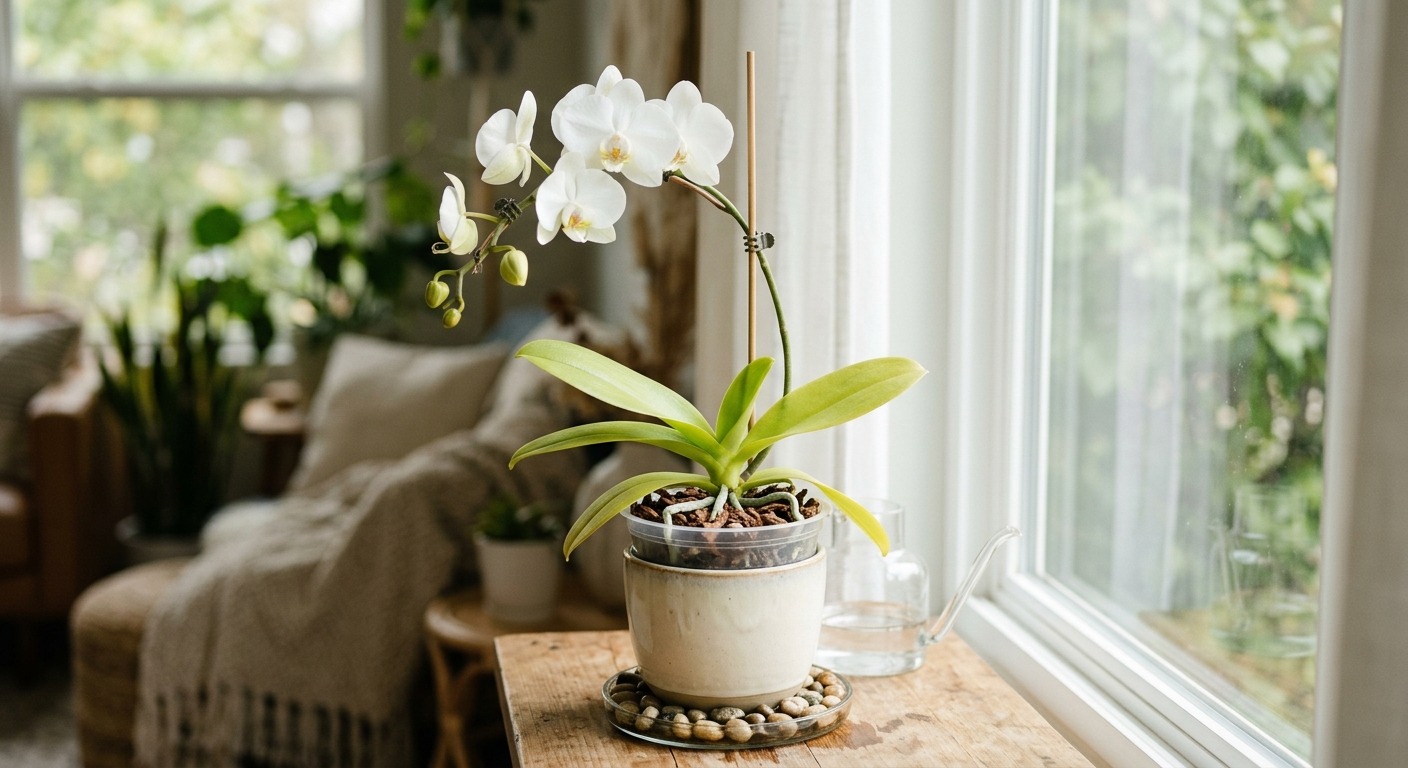
A Phalaenopsis orchid looks effortless when it arrives in the box. The first few weeks at home decide how long it stays that way. North Park Florist sends orchids all over Atlanta, and the same questions come up every time. Where should it sit? How much water does it need? Will it ever flower again?This guide covers phalaenopsis orchid care from the moment your plant arrives. You will learn the best light, a simple watering routine and the steps that help an orchid bloom a second time. Every tip is easy to follow, even if you have never kept an orchid alive.
Phalaenopsis Orchid Care in the First 48 Hours
Open the box as soon as it arrives. Lift the orchid out gently and remove any sleeve or tissue. Hold the plant by its pot, never by the flower spike, because the stem can snap under very little pressure.Check the leaves and roots for travel damage. Firm green leaves and plump roots are a good sign. A bud or two may drop after shipping, and that is normal. Do not repot the plant now. A new orchid needs a few quiet days to settle.Choose a spot away from cold drafts, heating vents and the fruit bowl. Ripening fruit gives off ethylene gas, which can make blooms fade sooner. A bright room with steady temperatures suits an orchid best.
Orchid Watering and Light Start With the Pot
Most orchids ship in a clear plastic pot tucked inside a decorative one. Keep it that way. The roots of a Phalaenopsis take in light, and the clear pot lets you see exactly when the plant is thirsty.The decorative pot has no drainage hole, so water can pool at the bottom. Lift the inner pot out each time you water and let it drain fully before it goes back. Standing water is the fastest way to lose an orchid.
The Right Light for a Healthy Orchid
Phalaenopsis orchids grow under tree canopies in the wild. That means bright light that is filtered, not direct. An east facing window is ideal. A south or west window works if a sheer curtain softens the afternoon sun.The leaves tell you how the plant feels about its spot. Light olive green is healthy. Very dark green means the plant wants more light. Yellow patches, red tinges or dry brown spots point to too much sun.Atlanta winters bring shorter days, so you may need to move the orchid closer to the glass. Keep the leaves from touching a cold window, since chilly glass can damage them overnight.
Watering a Phalaenopsis Orchid the Right Way
Most orchids do well with water about once a week. The schedule changes with the season, the pot and the room, so check the roots instead of the calendar. Silvery roots mean it is time to water. Green roots mean the plant still has enough.
Take the inner pot to the sink and run lukewarm water through the bark for about a minute. Let every drop drain out. Morning is the best time to water, because the plant has all day to dry.Keep water out of the crown, which is the center of the leaves where the new growth appears. Water that sits there can lead to rot. If some lands in the crown, blot it with a paper towel.
Orchid Watering and Light Mistakes to Avoid
Overwatering causes more orchid losses than anything else. Limp yellow leaves and soft, brown roots are the usual warning signs. If you see them, cut back on water and check that the pot drains well.
Dry air is the other common problem. Orchids like humidity between 40 and 60 percent. A tray of pebbles with a little water under the pot adds moisture without wetting the roots. A few simple habits keep things on track:
- Water in the morning, never at night.
- Use room temperature or lukewarm water.
- Skip ice cubes and heavy misting on the leaves.
- Empty the decorative pot after each watering.
Feeding and Repotting Your Orchid
Orchids are light feeders. Use a balanced orchid fertilizer at quarter strength every week or two while the plant is growing. Once a month, flush the bark with plain water to wash out any salt buildup.
Repot every one to two years, ideally after the plant finishes blooming. Use fresh orchid bark mix, never garden soil. Garden soil holds too much water and suffocates the roots. A clear pot only a little larger than the old one is plenty.
Phalaenopsis Orchid Care After the Flowers Fall
A blooming Phalaenopsis often keeps its flowers for two to three months. When the last petal drops, the plant is not dying. It is resting. This is the moment many people toss the orchid, and it is the moment to keep going.Keep the same light and watering routine. Healthy leaves and firm roots mean the plant is storing energy for its next round of flowers. A little patience now pays off later.
How to Get an Orchid to Rebloom
Start with the flower spike. If it is still green, cut just above the second or third node from the base. A new branch may grow from that point. If the spike has turned brown and dry, cut it about an inch above the base.Next, give the plant a cool night. A drop to about 60 to 65 degrees Fahrenheit for three to four weeks in the fall tells the orchid it is time to form a new spike. Place it near a cooler window in a room that stays above 55 degrees.Then wait. Many orchids rebloom within six to nine months, though timing varies from plant to plant. Keep the care steady, and watch for a small green bump near the base of the old spike.
When an Orchid Refuses to Rebloom
If months pass and nothing happens, look at the basics. Too little light is the most common cause. Skipping the cooler nights, overfeeding and damaged roots can also hold a plant back.Sometimes an orchid grows a baby plant, called a keiki, on the old spike or stem. This is a sign of a healthy plant. You can leave it in place or pot it separately once it has a few roots of its own.
Choosing an Orchid That Is Easy to Keep
A strong start makes care easier. Look for plants with firm leaves, plump roots and several unopened buds along the spike. Open flowers look great, but buds mean you will enjoy the show for longer.
Our team can help you pick a plant for your space and style. Browse the current selection in the flower shop or ask about custom flower arrangements in Atlanta that pair an orchid with greenery and a handmade container.If you are sending an orchid as a gift, a short care card helps the new owner a great deal. We are happy to include one. You can also read more about our Atlanta florist team and how we source our plants.
Where to Place an Orchid in a Busy Home
Kitchens and bathrooms often have the right humidity, but only if the window is bright. A dim bathroom will not do the plant any favors. Pick the room with the best natural light, then fine tune from there.
Keep orchids away from pets that chew leaves and from small children who love to pull on petals. Phalaenopsis orchids are generally listed as safe for cats and dogs, but a chewed plant will still suffer.Shopping from Buckhead or nearby? Our Buckhead florist page explains local delivery, which keeps travel time short and stress on the plant low.
Common Phalaenopsis Orchid Problems and Simple Fixes
Wrinkled, leathery leaves usually mean the plant is not getting enough water to its leaves. The cause may be underwatering, but it is often damaged or rotted roots that cannot take up moisture. Slide the plant out of its pot and look at the roots before you change anything.
Buds that drop before they open are called bud blast. Sudden temperature swings, cold drafts, ripening fruit and frequent moves are the usual causes. Pick a good spot early, and avoid shifting the plant around while buds are forming.Small white cottony spots or tiny brown bumps on the leaves point to mealybugs or scale. Dab them with a cotton swab dipped in rubbing alcohol. Check under the leaves and along the stem each week, and repeat the treatment until the pests are gone.
Orchid Watering and Light Adjustments for Each Season
In summer, the plant dries faster and the sun is stronger. You may water more often and pull the orchid back from a hot window. A sheer curtain helps a great deal on bright afternoons.In winter, growth slows, so water a little less and move the plant closer to the light. Keep it away from heaters and from air conditioning vents, which dry the leaves. Steady conditions matter more than perfect ones.
Pots, Bark and Stakes for a Stronger Plant
Orchid bark drains quickly and lets the roots breathe. Some growers mix in a little sphagnum moss to hold moisture in dry homes. Replace the mix when it breaks down into a soft, soil like texture, because old bark holds too much water.A thin stake and a few soft clips support a heavy flower spike. Attach the spike loosely and move the clips up as it grows. Avoid bending the spike sharply, since a stem under strain can crack.Try not to rotate the pot while buds are forming. The plant leans toward the light, and a sudden turn can stress it. Once the flowers are open, a gentle quarter turn each week keeps growth even.If your orchid still looks unhappy after these fixes, take a clear photo of the leaves and roots. Photos make it much easier to spot the problem, and a second opinion often solves it in minutes.
Your Orchid Care Plan in Short
Phalaenopsis orchid care comes down to a few habits. Give bright, indirect light. Water when the roots turn silver and let the pot drain. Feed lightly, repot every year or two, and give the plant cool nights to trigger a new spike.
Have a question about your own plant? Send us a photo and a short description, and we will point you in the right direction. You can reach the team any time through our contact page, or order a fresh orchid today and start your care routine with a strong, healthy plant.
FAQ
How often should I water a Phalaenopsis orchid?
Most orchids need water about once a week. Check the roots first. Silvery roots mean it is time to water, while green roots mean the plant is fine for now. Always let the pot drain fully.
Where is the best place to put an orchid at home?
Choose a spot with bright, indirect light, such as an east facing window. Keep it away from cold drafts, heating vents and ripening fruit.
Why are my orchid’s leaves turning yellow?
Yellow leaves usually point to overwatering or too much direct sun. Check the roots for softness, review your watering routine and move the plant out of harsh afternoon light.
Should I cut the stem after the flowers fall?
If the spike is green, cut above the second or third node to encourage a new branch. If the spike is brown and dry, cut it about an inch above the base.
How long does it take for an orchid to rebloom?
Many orchids rebloom in about six to nine months with the right light and a cool fall night. Timing varies, so keep up the care and be patient.
Is a Phalaenopsis orchid hard to care for?
No. It is one of the easiest orchids for beginners. Bright light, careful watering and good drainage cover most of what the plant needs.

