
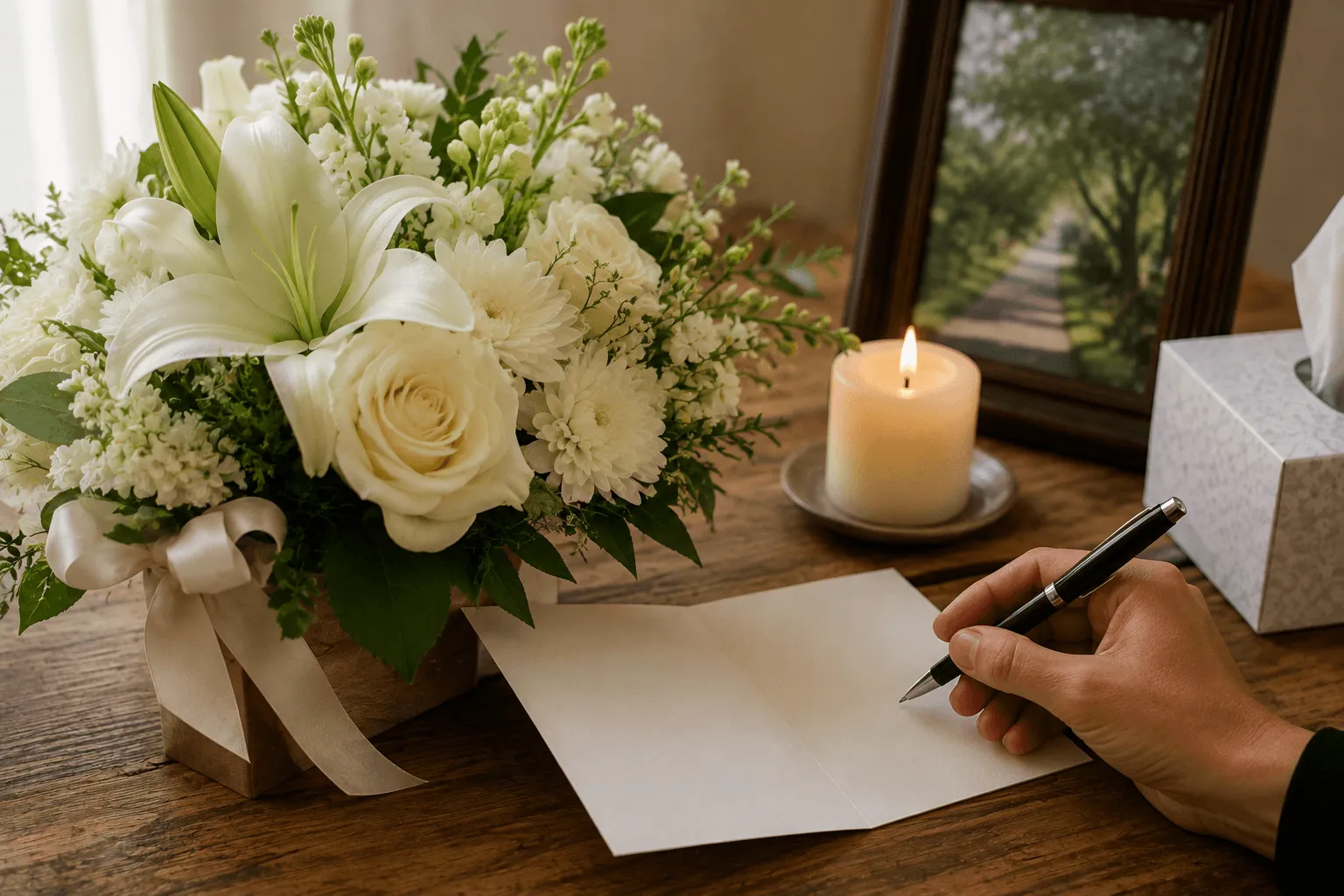
The best sympathy card messages are short, sincere, and focused on the person who died rather than on finding the perfect words. A simple structure works well: acknowledge the loss, share a brief memory or kind thought if appropriate, and offer support without making promises that are hard to keep. Avoiding clichés and religious assumptions, unless the family’s beliefs are known, keeps the message respectful and genuine.
Finding the right words after someone dies is one of the harder writing tasks most people face, and it is completely normal to sit with a blank card for longer than expected. Northpark Florist works with grieving families across Atlanta on a regular basis, often pairing a thoughtful arrangement with a card, and has seen firsthand which messages bring comfort and which ones feel hollow. This guide breaks down the etiquette, tone, and specific phrases that make a sympathy card meaningful.
The hardest part of writing a sympathy card is usually the first line. A safe and effective opening simply names the loss directly, such as acknowledging that you were sorry to hear about the person’s passing. This approach avoids sounding vague while still giving the recipient room to feel whatever they are feeling without a script to follow.
After the opening line, most well-written sympathy cards include one specific detail, whether that is a quality the deceased was known for, a memory shared with the family, or a simple statement about the impact that person had on others. Specificity matters more than eloquence here. A short, honest sentence about someone’s kindness or humor often means more than a lengthy passage borrowed from a greeting card aisle.
The closing of the card should offer support in a way that feels realistic. Rather than a vague offer to “let me know if you need anything,” which places the burden back on a grieving person to ask for help, a more effective closing names something concrete, such as checking in by phone the following week or being available to help with a specific task. This small shift in language signals genuine intention rather than a polite formality.
The appropriate tone for a sympathy card depends heavily on the relationship between the writer and the grieving person. A message to a close friend can be warmer and more personal. It can sometimes include a shared memory or an inside reference that would feel out of place in a note to a coworker’s family. A message to an acquaintance or distant colleague should stay respectful and somewhat more formal. It should focus on brief condolences rather than personal anecdotes.
Common condolence phrases like “thinking of you during this difficult time” or “sending you comfort and strength” work well as connective language between more personal sentences. But relying on them as the entire message can feel impersonal. These phrases function best as a bridge, not the whole message. They give structure to a note that still contains something specific and sincere at its core.
Religious language deserves particular care. Phrases referencing heaven, God’s plan, or an afterlife may bring comfort to families with matching beliefs. But they can feel dismissive or even upsetting to those who do not share that worldview. When the family’s beliefs are unknown, sticking to secular language about memory, legacy, and support is generally safer. It is also the more inclusive choice.
The right message often depends on the type of loss involved. For the death of a parent, acknowledging the specific role that person played tends to resonate more. This is truer than general statements about loss. This might include being a source of guidance or stability. For the death of a spouse, recognizing the depth of a shared life together shows genuine understanding. It reflects the scale of that grief. Even a single sentence can accomplish this.
Sudden or tragic losses require extra sensitivity in wording. In these situations, shorter messages are often better than longer ones. An attempt to explain or make sense of a tragedy can come across as minimizing. A simple statement of shock, sorrow, and presence is usually more appropriate. This is better than trying to find meaning in the loss itself.
Many people consider the death of a child the most difficult sympathy message to write. In this case, you can keep the note brief and focused entirely on love and support rather than reflection. Many etiquette experts and grief counselors agree that less language matters more in this specific situation. It should be paired with a genuine, present tone rather than filling the card with words.
One of the most common mistakes is comparing the loss to a personal experience, even with good intentions. Statements that begin with “I know how you feel because” can unintentionally shift focus away from the grieving person and onto the writer’s own story. Keeping the message centered on the recipient and the person who died maintains the right focus throughout.
Another frequent misstep is offering unsolicited explanations for the death, particularly in cases involving illness, accidents, or difficult circumstances. Phrases suggesting the loss happened “for a reason” or that the person is “in a better place” can feel presumptuous, even when meant kindly. Sticking to acknowledgment and support rather than interpretation avoids this pitfall entirely.
Length is worth mentioning as well. A sympathy card does not need to be long to be meaningful, and in many cases a shorter, well-chosen message reads as more sincere than several paragraphs. Grief counselors often note that recipients remember the feeling of a message far more than its length or literary quality.
A well-written card often accompanies flowers, and the two elements work best when they complement each other rather than compete for attention. Selecting sympathy flowers in Atlanta that suit the family’s preferences, whether that means soft, muted tones or a specific favorite flower of the person who passed, adds a personal layer to the gesture that a card alone cannot provide.
For families arranging a funeral or memorial service, understanding the factors to consider when choosing funeral flowers can help align the card’s tone with the overall arrangement being sent. A funeral flower arrangement paired with a heartfelt note creates a more complete expression of condolence than either element sent alone.
Timing and delivery location matter when sympathy flowers accompany a card. In situations involving hospice care or a hospital stay before passing, arranging flower delivery to Northside Hospital in Atlanta requires attention to hospital policies, since some facilities restrict certain flowers or delivery times for patient safety reasons.
For services held at a funeral home or place of worship, confirming delivery details with the venue in advance prevents flowers from arriving too early or too late for the viewing or service. A florist experienced in funeral arrangements can typically coordinate this timing directly, removing one more task from a family already managing a difficult schedule.
Personalization does not require perfect writing. A single sentence describing what someone admired about the deceased, whether that was their sense of humor, generosity, or quiet strength, often carries more weight than a lengthy, carefully composed paragraph. Grief experts frequently point out that authenticity outperforms eloquence in condolence writing.
For those who want additional guidance on selecting flowers that reflect a specific personality or relationship, browsing a full flower shop selection or requesting a custom arrangement built around the family’s preferences can help the entire gesture, card and flowers together, feel more personal and less generic.
Writing a sympathy card does not require perfect language or literary skill. A short, sincere message that names the loss, includes a specific and genuine thought, and offers realistic support covers the essentials of good condolence etiquette. Avoiding clichés, unsolicited explanations, and assumptions about religious beliefs keeps the note respectful across a wide range of situations.
Pairing that message with thoughtfully chosen sympathy flowers can add comfort during a difficult time, and reaching out to a local florist experienced in funeral and memorial arrangements takes the guesswork out of both the flowers and the delivery logistics. A heartfelt note and a well-chosen arrangement, sent together, often say more than either one could alone.
What is a simple sentence to write in a sympathy card? A simple and sincere option is acknowledging that you were saddened to hear about the loss. You can add that you are thinking of the person during this time.
Is it appropriate to mention God or heaven in a sympathy card? Religious language should only be used if the family’s beliefs are known and shared. When uncertain, secular language focused on memory, support, and comfort is a safer and more universally appropriate choice.
How long should a sympathy card message be? Sympathy card messages are typically two to four sentences long. Brevity paired with sincerity tends to be more comforting than a lengthy message, especially for close or sudden losses.
What should you avoid writing in a condolence card? Avoid comparing the loss to your own experiences. Also avoid offering explanations for why the death happened. Avoid using phrases that minimize the grief, such as suggesting the loss was “for the best.”
Should flowers always be sent with a sympathy card? Flowers are not required but are a common and meaningful way to accompany a card. Many families appreciate the combination, though some prefer flowers sent directly to a funeral home rather than a private residence.

We are a full service flowershop. We offer everyday flowers for birthdays, funerals and special occasion. We also specialize in weddings and events. Place an order or book with us today!

Monday: 9:00 am to 5:00 pm
Tuesday: 9:00 am to 5:00 pm
Wednesday: 9:00 am to 5:00 pm
Thursday: 9:00 am to 5:00 pm
Friday: 9:00 am to 5:00 pm
Saturday: 9:00 am to 2:00 pm
We are a full service flowershop. We offer everyday flowers for birthdays, funerals and special occasion. We also specialize in weddings and events. Place an order or book with us today!
Monday: 9:00 am to 5:00 pm
Tuesday: 9:00 am to 5:00 pm
Wednesday: 9:00 am to 5:00 pm
Thursday: 9:00 am to 5:00 pm
Friday: 9:00 am to 5:00 pm
Saturday: 9:00 am to 2:00 pm